Research&
Research&
Subscribe
Indian Economy5 min read

When No One Owns the Drain

When No One Owns the Drain
Abhijeet SinghAbhijeet Singh

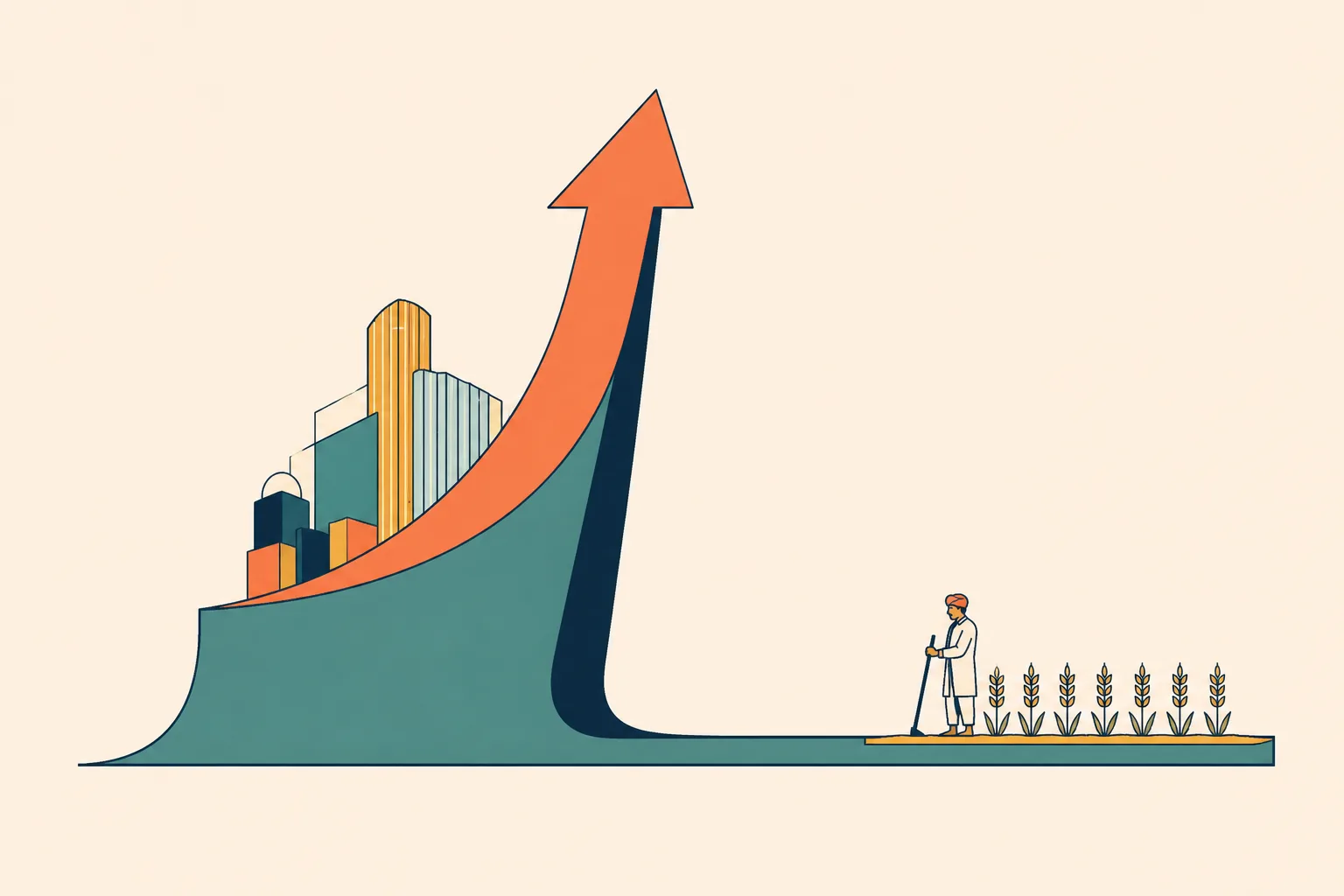
The public pays the price of India’s arrangement. Commuters lose hours. Shopkeepers lose stock. Basements flood. The economic hit is real yet diffuse, so no single department feels the full force.

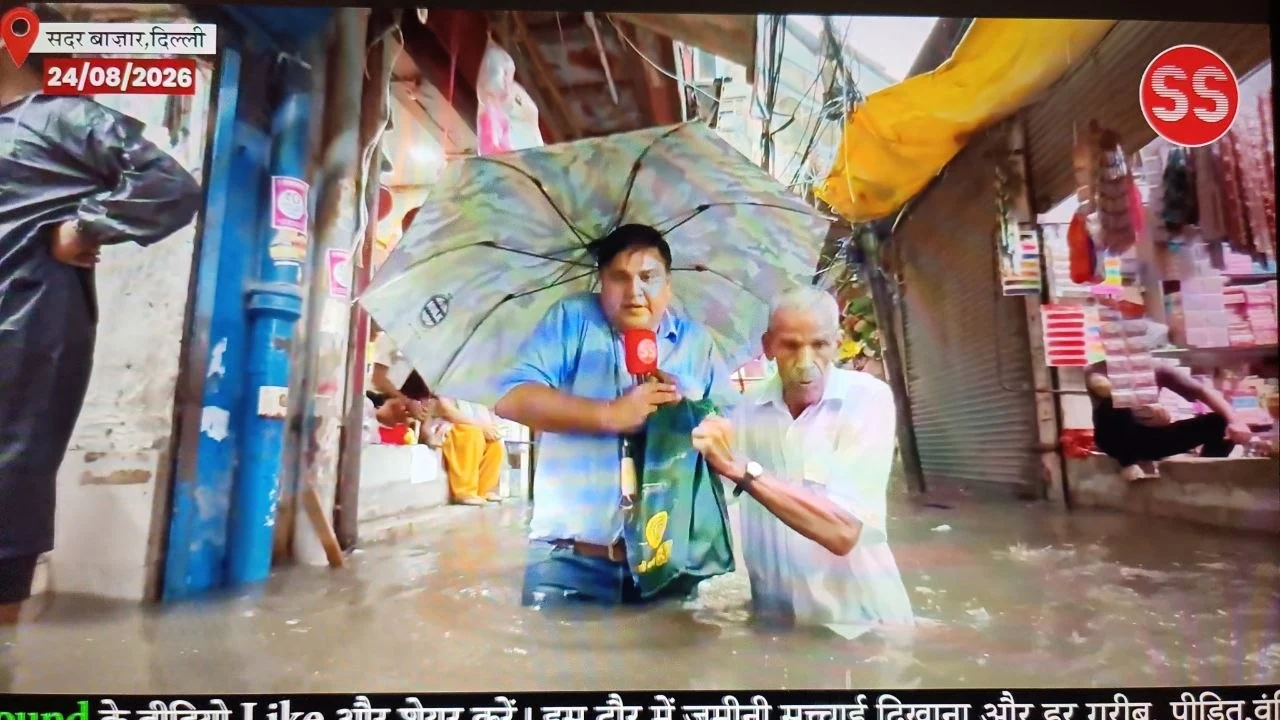
Every monsoon the same humiliation returns. In Sadar Bazar, water climbs the shop steps and trade stops for days. Years ago Minto Bridge was the annual emblem of failure—DTC buses vanishing under black water until the underpass was finally fixed. The choke simply shifted. In Gurugram, glass towers look down on streets that become lakes after a few hours of rain. Cars float, people wade home through knee-deep filth, offices declare work-from-home, and the city that markets itself as India’s corporate capital grinds to a halt. This is not rare weather or bad luck. It is a system that cannot decide who owns the problem, and a society that keeps making the problem worse.

Governments are not indifferent. They announce desilting drives with fanfare, allocate hundreds of crores, map waterlogging hotspots, open 24-hour control rooms and send ministers for inspections. The political cost of visible drowning is real. No chief minister or municipal commissioner wants those photographs. Yet the water returns every year because the network that should carry it away is sliced among too many owners, and the people who live beside it treat that network with casual contempt.

In Delhi the fragmentation is almost comical. MCD is responsible for narrower roads and local drains. PWD looks after the major arteries. Irrigation and Flood Control handles the big outfalls into the Yamuna. NDMC covers the central zone. DDA maintains drains in its own colonies. Delhi Jal Board runs the sewers that routinely overflow into the same channels. NHAI owns the national highway stretches. One continuous drain can change masters every few hundred metres. When water backs up, the first official reflex is to point at the next agency. Coordination meetings are held. Files move. Results lag. Gurugram is no cleaner. GMDA claims metropolitan-scale infrastructure. MCG handles municipal roads and surface drains. HSVP retains residual responsibility in many sectors. HSIIDC manages industrial zones. PWD and NHAI add further layers. A single underpass or nullah can sit at the junction of three jurisdictions. Accountability dissolves into paperwork.

Scene from Sadar Bazar courtesy Saurabh Sharma YouTube Channel

The public is not only the victim. Civic hygiene is treated as optional. Plastic bags, construction debris, kitchen waste and C&D rubble are dumped daily into the very drains meant to save the city. Natural nullahs, ponds and seasonal streams have been steadily encroached—turned into shops, temples, parking lots, even residential extensions. Those who occupy the land rarely face lasting consequence. A quiet bribe to the local building inspector or junior engineer often settles the matter. The encroacher stays, the drain narrows, carrying capacity falls, and the next heavy shower finds the weak point with ruthless precision. Officials who should protect the public right of way become quiet stakeholders in its violation. The citizen who throws garbage and the bureaucrat who looks the other way for a fee are partners in the same failure.

China runs a different machine. Central ministries set clear standards and targets. The Ministry of Housing and Urban-Rural Development oversees urban roads, drainage and the sponge-city programme that tries to make cities absorb and release water instead of simply shunting it downstream. Local city and district bureaus execute under unambiguous vertical lines of authority. Cadre careers still turn partly on measurable delivery of infrastructure and flood control. Large state firms build fast. Ownership of a stretch of road or drain is rarely ambiguous. When something fails, the response is seldom “not my drain.” China still floods in extreme events and still struggles with ageing underground pipes. The system produces local debt and a bias toward visible projects that photograph well. But the hierarchy forces someone to answer. That produces speed, scale and a degree of functional accountability that India’s fragmented arrangement simply cannot match.

The public in Delhi and Gurugram pays the price in real time. Commuters lose hours every monsoon day. Shopkeepers lose stock and customers. Basements flood, electrical systems short, and small businesses shut for days. The economic hit is large yet diffuse—spread across millions of people—so no single department feels the full force. In China the incentives lean the other way: visible failure can damage a career. India’s opposite problem is more corrosive. Diffuse ownership means diffuse pain. Money is spent, silt is claimed to have been removed, and the next heavy shower still finds the weak link that no one fully owns.

The stakeholder economics follow the structure. Contractors chase whatever tender is issued that year and move on. Officials defend their jurisdictional fences with bureaucratic skill. Residents and businesses absorb the recurring losses. No one captures the full benefit of a working drainage network, so the network is never finished. Meanwhile the quiet market of bribes keeps the encroachments alive and the drains half-choked. Every monsoon the same photographs appear, the same statements are issued, and the same cycle begins again.

Fixing this requires more than another round of desilting or another glossy master plan. It requires fewer owners for the same physical network, real and visible consequences when that network fails, and an end to the daily bargain that lets people shrink public drains for private gain. Governments already care about the optics of flooding. The harder test is whether they will confront the mechanism—and the quiet corruption and civic neglect—that keeps producing those photographs year after year. Until ownership matches the path the water actually takes, and until citizens and officials stop treating the drains as someone else’s problem, the same scenes will return every July and August.

#civic agencies#public infrastructure#government of india#delhi government#gurgaon#china

Indian Politics5 min read

Growth Numbers Hold, Selective Outrage Does Not

Growth Numbers Hold, Selective Outrage Does Not
The rise of outrage economy in India is a concern
Abhijeet SinghAbhijeet Singh

Access to certain media, international platforms, and activist networks is easier when the critique aligns with a preferred political direction

India’s economy grew 7.8 percent in real terms in the first quarter of FY 2026-27. Nominal growth stood at 10.3 percent. The Ministry of Statistics released these numbers after shifting to the 2022-23 base year. The same revision lowered the estimated size of the economy by roughly 3 to 3.8 percent across recent years. Former Finance Secretary Subhash Chandra Garg went on television and claimed that without the downward revision of the previous year’s Q1 figure from about ₹86 lakh crore to ₹80 lakh crore, nominal growth would have been only 2.6 percent. Several economists immediately pointed out that the ₹86 lakh crore number belonged to the old 2011-12 series while the current figure belonged to the new series. Comparing the two is not valid arithmetic. Yet the 2.6 percent claim travelled faster than the clarification.

Indicator Official (New 2022-23 Series) Garg Claim (Old Series Mix) Difference
Real GDP Growth 7.8% Near 0% (implied) 7.8 percentage points
Nominal GDP Growth 10.3% 2.6% 7.7 percentage points
Q1 FY26 Nominal GDP (base) ₹80 lakh crore ₹86 lakh crore (old series) ₹6 lakh crore
Q1 FY27 Nominal GDP ₹88.27 lakh crore Same
Economy Size Revision (2022-26) 3% to 3.8% lower Not adjusted Cumulative ₹43+ lakh crore

This pattern is now familiar. A technical revision or a strong data release is followed within hours by a former official who extracts one number, strips the context, and offers a simpler, darker story. The story then becomes the headline for opposition parties and a section of the media. The actual series notes, the successive data updates, and the multi-year revision history remain unread by most viewers.

Look at the broader record. Between 2014 and 2024 the central government’s capital expenditure rose from under ₹2 lakh crore to more than ₹10 lakh crore in successive budgets. The ratio of capital spending to total expenditure climbed steadily. Road construction under Bharatmala and related programmes added tens of thousands of kilometres. Railway capital outlay crossed ₹2.5 lakh crore in recent years. Power generation capacity expanded by over 150 GW in the decade. These are not abstract claims. They appear in the budget documents and in the physical progress reports of the ministries.

Scheme Beneficiaries / Units Key Metric Pre-2014 Baseline (approx)
Jan Dhan Yojana 50+ crore accounts Bank accounts opened Under 15 crore
Ujjwala 10+ crore connections LPG connections Under 2 crore
PM-KISAN 11+ crore families Cash transfers (multiple instalments) Nil
PMAY (Housing) 3+ crore houses Houses completed Under 50 lakh
Ayushman Bharat 50+ crore individuals Hospitalisation cover Nil

Welfare coverage expanded at the same time. Under the Pradhan Mantri Jan Dhan Yojana more than 50 crore bank accounts were opened. Direct benefit transfer systems now move subsidies for cooking gas, fertilisers, food and pensions without the earlier leakage rates of 30 to 40 percent reported in multiple CAG studies before 2014. The Ujjwala scheme distributed over 10 crore LPG connections. PM-KISAN has transferred cash to more than 11 crore farmer families in multiple instalments. The number of houses completed under PMAY crossed 3 crore. Ayushman Bharat covered over 50 crore individuals for hospitalisation costs. These numbers are large because the base population is large. They also represent a deliberate shift from price subsidies that leaked to targeted transfers that reach the intended household.

Public spending on these programmes rose even while the fiscal deficit was brought down from the double-digit levels seen after the pandemic. The same government that increased capital expenditure also raised the tax-to-GDP ratio through GST and better compliance. Corporate tax collections and personal income tax collections both showed double-digit growth in several years. The informal sector formalisation measured by GST registrations and e-way bills continued to expand.

Year Approximate Signatories Main Subjects Recurring Names Present
2017 65 (civil) + 114 (military) Cow vigilantism, intolerance Mander, Habibullah, Ribeiro
2018 48–49 Kathua-Unnao, Bhima-Koregaon Roy, Mander, Saxena, Sircar
2019 48–71 NRC-CAB, Pragya Thakur Saran, Ribeiro, Saxena
2022 100+ Politics of hate Menon, Singh, Pillai, Jung, Nair
2023 82–94 Civil service character, pension rules Agnihotri, Balachandran
2026 93 Police action on students Menon, Lavasa, Dulat, Roy, Mander

None of this has stopped a steady stream of post-retirement criticism from a small set of former officials. The Constitutional Conduct Group has issued open letters with 48, 65, 71, 82, 94, 100 and sometimes more signatories. The letters cover cow vigilantism in 2017, the Kathua and Unnao cases in 2018, Bhima-Koregaon arrests, the Citizenship Amendment Bill, Central Vista, politics of hate in 2022, changes to service rules in 2023, police action against student protesters in 2026, and several other subjects. The same names appear repeatedly: Anita Agnihotri, Aruna Roy, Harsh Mander, Julio Ribeiro, Wajahat Habibullah, Najeeb Jung, Shivshankar Menon, Sujatha Singh, Ashok Lavasa, A.S. Dulat, G.K. Pillai. Many of these officers held senior posts under previous governments. After retirement they discovered a consistent pattern of constitutional crisis under the current one.

Former Chief Economic Adviser Arvind Subramanian published papers in 2019 and again in 2026 arguing that GDP growth after 2011 was overestimated by 1.5 to 2.5 percentage points a year. The methodology relied on the divergence between official GDP and a set of physical indicators. The same author had been inside the system when the new series was introduced. The papers receive wide coverage each time they appear. Rebuttals that point to the limitations of the indicator set or the effect of structural formalisation receive less attention.

Retired military officers have joined on selected issues. Over 150 veterans, including several former service chiefs, wrote to the President in 2019 against the political use of the armed forces. Former Army Chief M.M. Naravane’s memoir excerpts described Agnipath as a scheme thrust upon the services. Former Navy Chief Arun Prakash called the scheme detrimental to combat effectiveness and described Agniveers as barely trained. A 2017 letter signed by more than 110 veterans condemned vigilantism and the targeting of minorities. These statements are real. They also represent a fraction of the total retired officer community.

Retired judges have spoken less often but with equal sharpness when they do. Justice Madan Lokur has criticised “bulldozer justice,” the use of UAPA and NSA, and the judicial backlog. Justice A.P. Shah has said the Supreme Court has watched the trampling of dissent. The 2018 press conference by four senior sitting judges remains a reference point. At the same time other groups of 21, 44, 56 and more retired judges have written letters defending the judiciary against what they call motivated political attacks. The retired judiciary is itself divided.

The cumulative effect of these interventions is measurable in public discourse. Every GDP release is now preceded by the expectation of a counter-claim. Every welfare announcement is followed by a letter questioning motives or implementation. The volume of open letters creates an impression of continuous institutional revolt. The common citizen who receives the DBT credit, the LPG connection, or the completed house does not write open letters. The citizen who travels on the new highway or the expanded metro does not appear on television panels. The noise is generated by a few hundred people who once held high office and who retain access to platforms.

This noise has costs. Policy uncertainty rises when every major data release is immediately contested by a former insider. Investor confidence is affected when growth numbers are treated as inherently suspect. Administrative officers still in service observe the post-retirement trajectory of their seniors and adjust their own risk appetite. Constructive criticism that identifies specific implementation failures or data gaps is drowned by the broader claim that the system itself is compromised. The distinction between a technical disagreement over deflators and a charge of statistical jugglery collapses.

The intellectual dishonesty is selective. Many of the same voices were silent or supportive when similar methodological revisions or welfare expansions occurred under earlier governments. The 2011-12 base year change itself produced large upward revisions in the size of the economy. The silence then and the volume now is not explained by a sudden discovery of statistical principle. It is explained by the identity of the government in power. Stakeholder economics plays its part. Access to certain media, international platforms, and activist networks is easier when the critique aligns with a preferred political direction.

The common citizen experiences the results differently. A farmer who receives the PM-KISAN instalment every four months does not recalculate the GDP deflator. A woman who no longer has to collect firewood because of an Ujjwala connection does not debate the informal sector proxy. A student whose school received a new classroom under a central scheme does not parse open letters about institutional hatred. These citizens form the electoral majority that has returned the government three times. Their lived experience of improved connectivity, direct transfers, and expanded basic services sits in tension with the narrative produced by the retired elite.

Constructive criticism remains necessary. Data quality in India has genuine gaps. Informal sector measurement is imperfect. Deflator choices affect real growth estimates. Implementation of welfare schemes has leakages and exclusion errors. Agnipath required better consultation and longer training. Capital expenditure must eventually translate into private investment. These are legitimate subjects for debate. A former finance secretary who points to a specific series inconsistency and explains the arithmetic can improve public understanding. A former CEA who publishes a transparent paper with clear assumptions contributes to the technical literature. A retired general who argues that short-term recruitment reduces unit cohesion forces the system to respond with better data on retention and training outcomes.

Individual Former Position Key Public Claim / Action Year(s)
Subhash Chandra Garg Finance Secretary Q1 growth effectively 2.6% due to revision; books on internal differences 2019–2026
Arvind Subramanian Chief Economic Adviser GDP overestimated 1.5–2.5 pp annually post-2011 2019, 2026
Madan B. Lokur Supreme Court Judge “Bulldozer justice”, UAPA/NSA overuse, backlog 2023 onward
A.P. Shah Delhi/Madras HC Chief Justice Judiciary watched trampling of dissent Post-2014 interviews
M.M. Naravane Army Chief Agnipath “thrust upon” services Memoir excerpts
Arun Prakash Navy Chief Agnipath degrades combat effectiveness 2022–2024
Multiple veterans Service Chiefs & officers 150+ signatories against political use of military 2019

The problem begins when the same individuals move from technical disagreement to a continuous claim of systemic malice. When every revision is treated as fudging, every welfare expansion as electoral bribery, and every security decision as authoritarian overreach, the space for evidence-based correction shrinks. Public opinion is shaped by the loudest and most repeated claims rather than by the cumulative physical evidence of roads built, accounts opened, and transfers completed. The nation pays the price in delayed consensus on reforms that require broad support.

Only a small number of powerful people after retirement choose this path of sustained institutional attack. The majority of retired civil servants, judges and officers remain silent or continue private work. The few who dominate the public conversation create the impression of a larger revolt than exists. Their access to platforms multiplies the effect. The result is a distorted feedback loop in which the government is forced to spend political capital defending numbers that the underlying data already support, while genuine implementation problems receive less focused attention.

India’s growth rate of 7.8 percent in a single quarter does not solve every problem of employment quality or regional disparity. The rise in capital expenditure does not automatically produce matching private investment. The expansion of welfare coverage does not eliminate exclusion. These are real limits. They are also different from the claim that the growth itself is fabricated or that the welfare architecture is primarily an instrument of political control. The numbers on bank accounts, LPG connections, highway kilometres, and tax collections are large, verifiable, and cumulative. They continue to expand even as the open letters continue to arrive.

The test for any post-retirement intervention is simple. Does it improve the accuracy of public understanding or does it substitute one selective narrative for another? The record of the last decade shows that a minority of former officials have chosen the second route with consistency. The cost is paid by the clarity of public debate and by the ability of the system to correct itself on the basis of evidence rather than on the basis of prior institutional loyalty.

#finance#economy#subhash garg#gdp#politics

Indian Economy5 min read

India’s 7.8% Triumph Still Leaves the Farm Behind

India’s 7.8% Triumph Still Leaves the Farm Behind
Agriculture is not living up to the expectations in India's growth story
Abhijeet SinghAbhijeet Singh

India sits as the sixth-largest economy in nominal terms at roughly 4.15 trillion dollars. On purchasing-power parity it is already third, behind only China and the United States, at around 18.9 trillion dollars

India’s economy just put up another number that forces a second look. In the April-June quarter of 2026-27, real GDP grew 7.8 per cent. Nominal growth hit 10.3 per cent. Real GDP stood at ₹81.36 lakh crore. Nominal GDP reached ₹88.27 lakh crore. The full year 2025-26 had already come in at roughly 7.7 to 7.8 per cent. For a large emerging economy carrying 1.4 billion people, these are serious numbers. They have turned more than a few consistent critics into cautious believers. The government deserves credit for keeping the growth engine running through global oil shocks, supply-chain noise and uneven monsoons. Public capital expenditure has stayed elevated. Manufacturing has delivered stretches of 9 per cent-plus growth. Services, especially financial, real estate, IT and professional services, have posted 12.1 per cent in the latest quarter. Gross fixed capital formation has been firm. The new base year of 2022-23 and the updated methodology have made the accounts more granular, pulling in GST, e-Vahan, PFMS and other administrative data. The result is a clearer, more current picture of an economy that is still expanding faster than almost any peer of comparable size.

On the global table the ranking holds up. India sits as the sixth-largest economy in nominal terms at roughly 4.15 trillion dollars. On purchasing-power parity it is already third, behind only China and the United States, at around 18.9 trillion dollars. In the last twelve years the country has racked up multiple quarters above 7 per cent, a solid run above 6.5 per cent and a still larger set above 6 per cent. G7 economies have been crawling along at 1 to 2 per cent for long stretches. The contrast is arithmetic, not spin.

Arithmetic and lived experience still pull in different directions. The primary sector remains the clearest under-performer. Agriculture, livestock, forestry and fishing grew only 3.6 per cent in the latest quarter. Mining and quarrying contracted 2.4 per cent after a high base. These soft patches have persisted across successive quarters and years. The primary sector has struggled to clear 3 to 4 per cent while services and manufacturing have run at double or near-double that pace. Agriculture still employs a huge slice of the workforce, often estimated near 40 per cent or more, yet its share of gross value added continues to shrink toward 15-18 per cent. Mining is small in value added but matters for industrial inputs and for the regions that depend on it. These are the bad mules. They do not pull their weight in the growth story, and they receive less airtime because the headline GDP number looks strong.

The reasons are structural. Farming remains fragmented, monsoon-dependent and low on mechanisation and irrigation in large parts of the country. Allied activities such as livestock and fisheries do better, but they cannot fully offset crop-side weakness. Mining faces clearance delays, environmental constraints, weather interruptions and fluctuating global prices. Private capital prefers manufacturing, power, data centres, IT and financial services. Public capital expenditure has been heavy on roads, railways and energy. Agriculture gets large revenue support through schemes, subsidies and income transfers, but the capital intensity directed at raising farm productivity lags the infrastructure push that feeds the secondary and tertiary engines. In relative terms the primary sector absorbs a far smaller share of both government capital spending and private gross fixed capital formation than manufacturing or services.

Nominal versus real adds another layer. The 10.3 per cent nominal growth in the latest quarter looks robust, yet the gap with the 7.8 per cent real figure reflects the price level. For households that gap shows up directly. Retail inflation has stayed uncomfortable in food items such as sugar and edible oils. Gold and silver have touched record highs. Real purchasing power for the median household does not expand at the same rate as the GDP deflator or the services deflator. The common citizen does not live inside the national accounts. She lives inside her monthly budget. When food, fuel and essentials rise faster than her income, the 7.8 per cent number feels distant.

Job growth cuts closest to the bone. Official unemployment rates under the Current Weekly Status in the Periodic Labour Force Survey have hovered between 5.1% and 5.5% in recent months of 2026 (5.5% in June, easing to 5.1% in July), levels that many still consider elevated for an economy expanding at 7–8%. Urban rates sit higher at around 6.6–6.7%, while youth unemployment (ages 15–29) remains far more acute at 15.9% in the April–June 2026 quarter. Underemployment is more pervasive still, with a large share of the workforce engaged in low-hour or low-productivity work. Gig work has expanded rapidly—reaching 12 million workers in FY25, a 55% rise from 7.7 million in FY21, and now over 2% of the total workforce—yet it remains insecure by design, with roughly 40% of gig workers earning below ₹15,000 a month and limited access to social security or stable credit. Formal job creation has not kept pace with the 8–10 million new entrants joining the labour force each year. Manufacturing has grown strongly in value added, yet its employment elasticity has stayed modest, often in the 0.2 range in longer-term estimates, meaning output gains translate into relatively few additional jobs. Services growth has been concentrated in higher-skill segments such as financial, IT and professional services. The labour market continues to absorb large numbers into low-productivity self-employment or casual work rather than into stable, rising-wage employment. Absolute employment stood at an estimated 56.6 crore persons aged 15 and above in the April–June 2026 quarter, but the quality and security of those jobs lag the headline GDP numbers. GDP can rise while the quality of work for large numbers of people stagnates. This remains the central distributional fact of the current growth phase.

Can government spending alone keep the ship at 7-plus per cent? The short answer is no. Public capital expenditure has been a genuine stabiliser and enabler. It has crowded in some private investment and built physical capacity. But fiscal space is finite. Debt dynamics, interest payments and the need to keep deficits credible set hard limits. Prolonged reliance on government demand without a matching rise in private investment, productivity and export competitiveness eventually produces diminishing returns or macroeconomic stress. The long-run growth rate is set by private capital formation, total factor productivity, skills and the ability to reallocate labour out of low-productivity activities. Government can create conditions. It cannot permanently substitute for those forces.

The methodology change itself is worth noting without exaggeration. Moving the base year to 2022-23 and incorporating more administrative data improved coverage and reduced some of the earlier reliance on outdated ratios. Growth rates under the new series have been revised in places, but the broad direction remains one of solid expansion. Improved measurement of a dual economy still leaves the dual economy intact.

Stakeholder economics clarifies the split. For the government the high growth rate validates policy continuity, supports debt sustainability narratives and strengthens the external story. For large corporates and formal services firms the numbers translate into volume growth, capacity utilisation and pricing power. For equity markets and foreign investors the ranking and the growth differential versus the G7 remain attractive. For the median citizen the transmission is slower and incomplete. Higher GDP eventually raises the tax base and the fiscal room for transfers and public services, but the lag can be long and the leakage large. When agriculture lags, rural demand softens. When formal job creation is weak, the consumption impulse from the lower half of the income distribution stays muted. When inflation in essentials stays elevated, real wages for many households do not rise in line with the aggregate.

The last four quarters illustrate both the strength and the unevenness. Growth has stayed above 7 per cent in several recent prints, including back-to-back 7.8 per cent readings. Manufacturing and financial-IT services have carried the load. Construction has been supportive. Yet the primary sector has repeatedly underperformed. Absolute GDP has climbed into the 4-trillion-dollar neighbourhood in nominal terms and far higher on PPP. Those are not small achievements. They have forced a re-rating of India’s medium-term prospects among many who once bet against sustained high growth.

Still, the ground reality refuses to be airbrushed. A large workforce remains tied to a sector that grows at roughly half the overall rate. Underemployment and insecure work remain widespread. Inflation in the kitchen continues to bite. Private investment continues to flow disproportionately toward the already-strong segments. Public spending has done heavy lifting, but it cannot permanently paper over low productivity in the areas that employ the most people.

The honest reading stays double. The government has delivered growth numbers that have proved many sceptics wrong and that place India in a rare position among large economies. At the same time the composition of that growth, the lagging primary sector, the quality of jobs and the incomplete transmission to household purchasing power remain the binding constraints on how widely the gains are felt. High aggregate growth is necessary. It is not sufficient. Until the bad mules start pulling harder and until more of the workforce moves into higher-productivity activity with rising real incomes, the distance between the national accounts and the ordinary household will persist. The numbers are impressive. The lived experience is more mixed. Both need to stay in the frame.

#gdp#india#unemployment#nominal gdp growth india#real gdp growth india

Indian Economy5 min read

Degrees, Debt and the Delivery Trap

Degrees, Debt and the Delivery Trap
Gig work economy in India
Abhijeet SinghAbhijeet Singh

Women remain almost entirely excluded from the highest-volume segments. Two-wheeler delivery participation by women sits under 1% in urban India according to recent research.

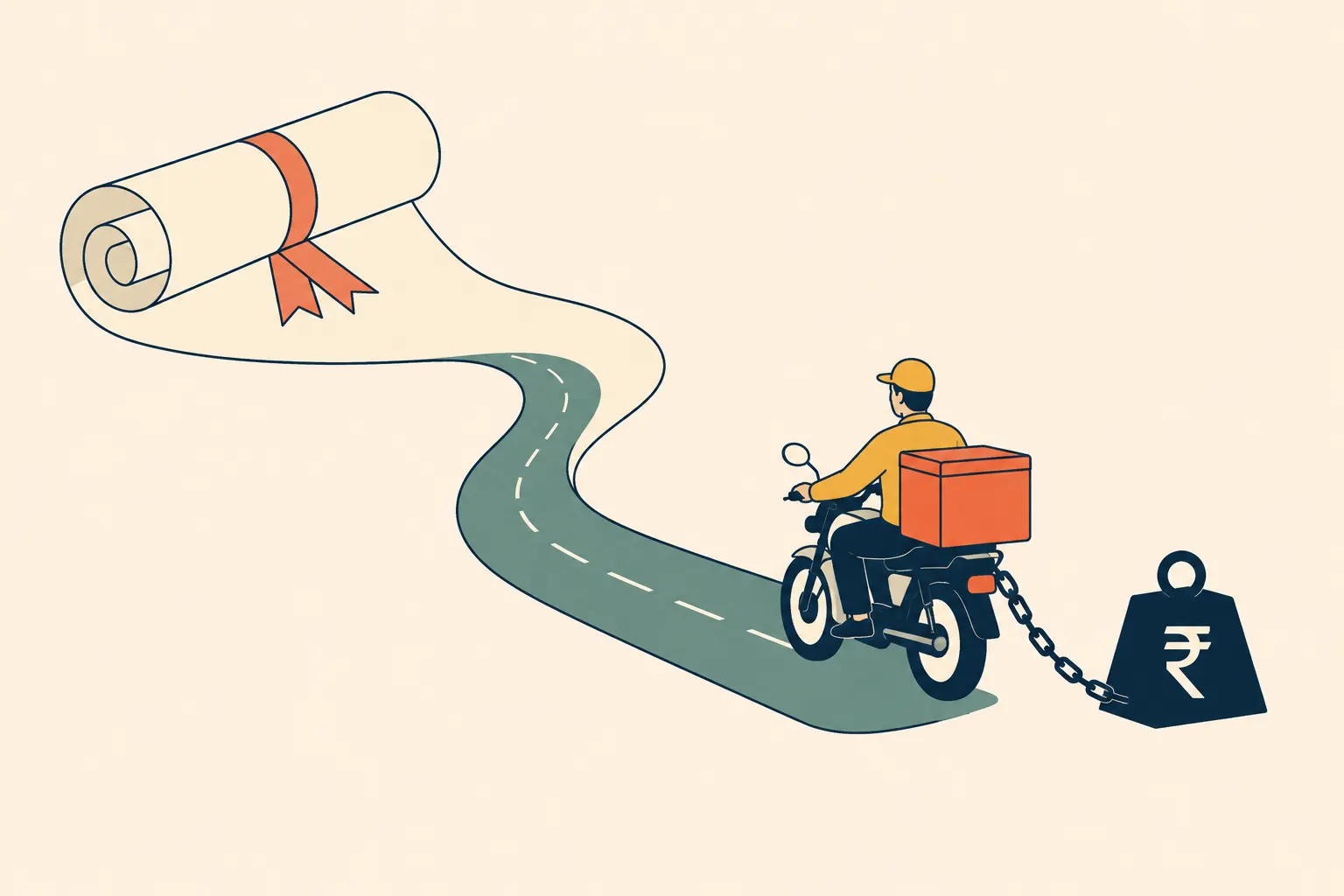
India’s platform workforce has grown from 7.7 million in FY21 to 12 million in FY25. Official projections put the figure at 23–23.5 million by 2029-30, or roughly 6.7% of the non-agricultural workforce. That expansion ranks among the largest employment shifts of the last decade, and it has occurred with almost no direct fiscal outlay by the state. The scale is real. The quality of the work, and the debt that often underwrites it, is the sharper question.

Government intentions are not difficult to understand. Create jobs that absorb young people, sustain urban consumption, and avoid the heavier cost of industrial subsidies or expanded rural guarantees. Public debt finances the roads, digital rails and power that make rapid delivery possible. India’s debt-to-GDP ratio remains lower than Japan’s (above 200%), the United States’ (near 125%), and several large European economies. Borrowing to build productive capacity can support growth. Borrowing that mainly underwrites the absorption of surplus labour into high-intensity, low-security work is a different calculation. The interest payments do not distinguish between the two.

The education system continues to produce graduates faster than the formal economy produces matching jobs. Unemployment among those with secondary education and above runs several times the overall rate. Graduate unemployment sits in the 11–13% range in recent data, far higher than the national figure near 3%. Among young graduates, only about 26 in 100 hold regular salaried positions; just 4 in 100 enjoy the full package of written contracts, paid leave and social security. Most employed graduates work outside their field of study. NITI Aayog analysis has put the share in high-competency occupations matching their qualifications as low as 8%. Families still treat the degree as insurance. The labour market treats it as optional. The waiting itself extracts a cost measured in depleted savings and lowered expectations.

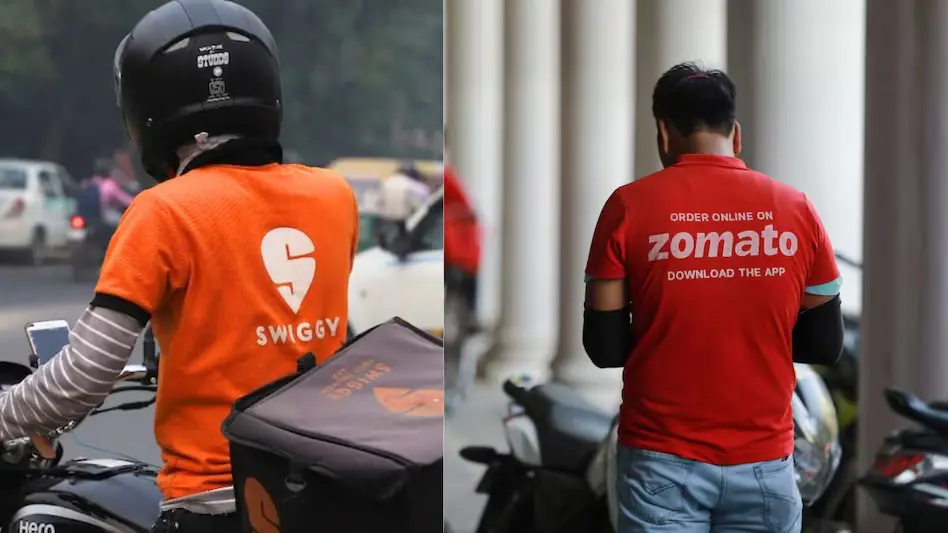
Gig working demands physical stamina, tolerance for heat, traffic and overcoming the stigma of society

Platform work fills part of the resulting vacuum. It offers rapid entry and cash income for migrants and others with limited formal networks. Yet the arithmetic on the ground is unforgiving. Full-time metro earnings can reach the low-to-mid 20,000s rupees gross in strong months, but fuel, maintenance, data and penalties routinely claim 20% or more. Most partners do not log the full-time hours assumed in optimistic averages; platform data has shown average annual log-in days far lower. Earnings swing with weather, festivals, incentive changes and the constant arrival of new riders. Income volatility is not an exception. It is the baseline, as the Economic Survey has itself noted.

Debt converts that volatility into compulsion. A working two-wheeler is the practical entry ticket. Most riders do not purchase it with savings. Formal and semi-formal loans finance the bike and often the phone. Monthly EMIs of ₹2,500–4,000 become a fixed claim on irregular receipts. When volumes drop, the worker must simply ride longer to service the asset. Missed payments trigger penalties or recovery pressure. Fresh borrowing—frequently from fintechs at 14–36% or from informal sources—plugs the gap. Studies show 60% or more of gig workers struggle to access formal credit at reasonable rates because of thin credit files. The scooter becomes both the means of earning and the mechanism that makes exit expensive. This pattern is structural, not anecdotal.

Women remain almost entirely excluded from the highest-volume segments. Two-wheeler delivery participation by women sits under 1% in urban India according to recent research. Safety concerns, mobility restrictions, social norms and limited access to capital keep the numbers that low. The flexibility platforms advertise does not travel equally. Stakeholder economics therefore remains incomplete. Platforms control the algorithm, the incentive structure and the power to deactivate. Workers supply labour and their own capital, often debt-financed. The state supplies infrastructure and regulatory space. Consumers receive convenience priced on thin margins for the people doing the physical work. When terms tighten, the adjustment falls hardest on those already carrying vehicle debt and thin buffers.

Not every young person is suited to this work. It demands physical stamina, tolerance for heat and traffic, the ability to absorb unpaid waiting time, and a willingness to be rated by strangers after every trip. Many want something that compounds: skills that rise in value, relationships that open further doors, work that does not disappear with the next software update. Treating platform employment as a permanent destination for the non-elite is not a development strategy. It is a holding pattern that absorbs surplus labour while the formal sector expands too slowly.

Rhetoric from every side has been thin. Industry voices celebrate scale and disruption while soft-pedalling the human cost of algorithmic pressure, incomplete insurance and debt service. Activist critiques sometimes treat every platform job as pure exploitation without acknowledging that for many the realistic alternatives pay less or do not exist. Official statements highlight the jump from 7.7 million to 12 million and the path to 23 million while the design of portable social security, accident cover and income-smoothing tools still lags the speed of expansion. The facts sit in the middle. Platforms have absorbed millions at low fiscal cost. They have also concentrated risk—and vehicle debt—on workers who already operate with thin margins.

Debt-based growth only works when the assets raise future productivity. Degrees only retain value when the jobs that use them expand at scale. Gig work only serves as a bridge when credible exit routes exist. At present the bridges are crowded, the debt service is real, and the exits remain narrow. Young people who treat platform earnings as temporary income while they build skills that compound are navigating the system with clear eyes. Those who treat it as a destination risk being locked in when saturation, automation or the next incentive cut arrives.

The harder task is expanding the set of ordinary jobs that pay enough, protect enough and leave room for dignity. That requires looking squarely at the distribution of the 12 million current workers, the projected rise to 23 million, the real burden of vehicle EMIs, the near-total gender exclusion in delivery, the quantified mismatch between degrees and formal absorption, and the power imbalance between platforms and the people who keep the system moving. Until those numbers shape policy more than the rhetoric does, the gap between intention and ground will keep widening.

#indian gdp#debt to gdp#degrees in india#gig workers#informal economy#unemployment

Indian Economy5 min read

Gurugram’s Liquor Crores Can’t Hide Its Broken Lanes

Gurugram’s Liquor Crores Can’t Hide Its Broken Lanes
Gurgaon has a problem which its revenue can't hide
Abhijeet SinghAbhijeet Singh

Civic drives to seal illegal ground-floor commercial use produce temporary boards overnight. The shops reappear once the cameras leave. Police, municipal officers, and local political networks are widely understood to know the arrangement. The money that keeps the system smooth is not always the money that appears in the official ledgers.

Gurugram looks like progress until you walk its streets after dark. From Cyber Hub through the sectors to IFFCO Chowk and the by-lanes beyond, the city sells a particular dream: glass-fronted wine shops lit like showrooms, open till three or four in the morning, stocked for people who leave offices in pressed shirts and still want a cold beer on the way to the metro. Discovery-style outlets and their cousins sit on nearly every commercial stretch. Office workers stand outside with bottles in hand. There is no particular decorum required. After sunset the place shifts. It becomes louder, looser, more transactional. This is not the old Sahara Mall circuit. This is the heart of the corporate CBD, the part of Haryana that generates the money the rest of the state depends on.

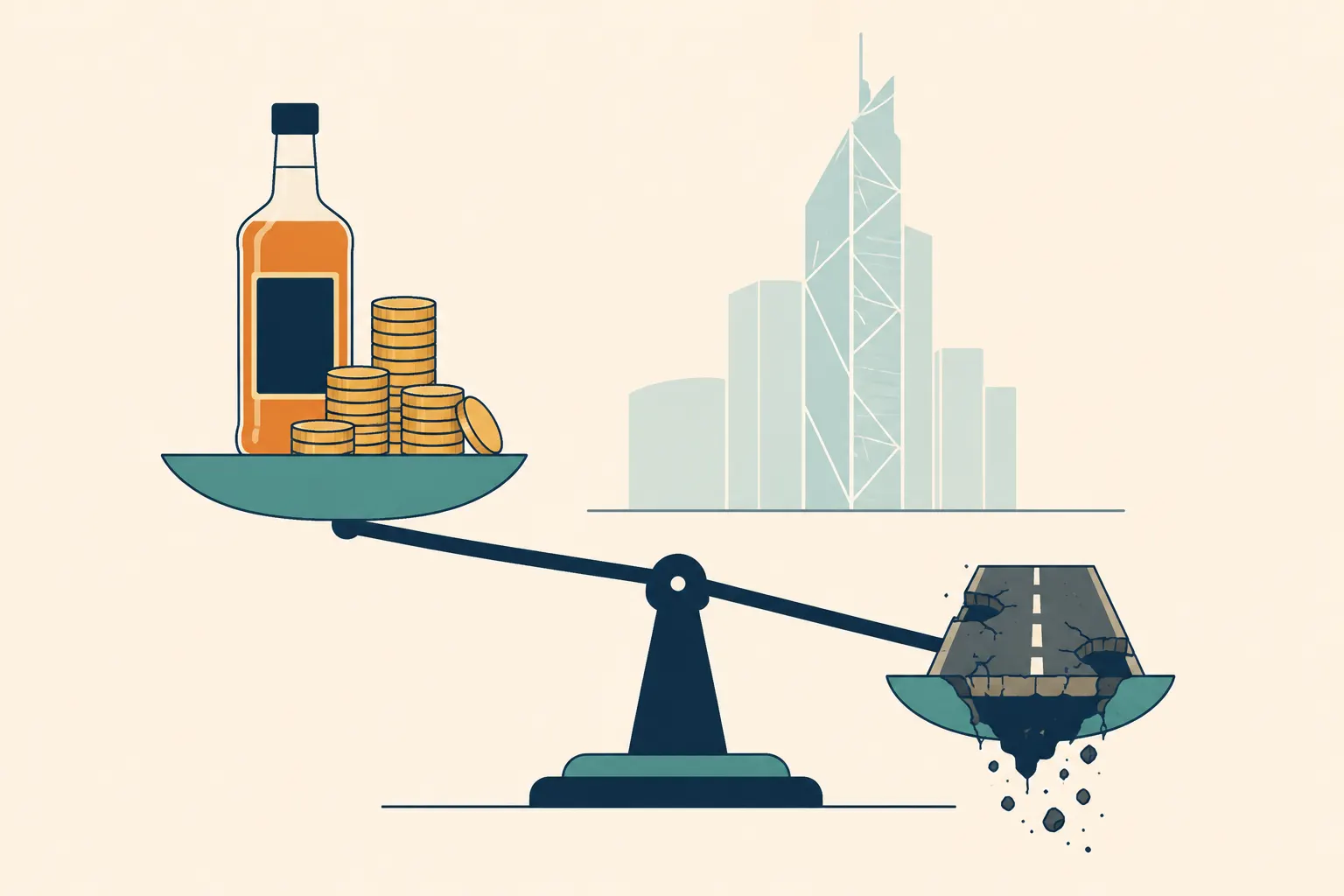
The government knows this. Haryana’s excise policy is not subtle about its priorities. In the 2025-27 cycle the state pulled in ₹14,342 crore from liquor zone auctions alone. Gurugram delivered ₹3,875 crore of that—twenty-seven percent of the entire haul—from a single district. Faridabad came next at ₹1,696 crore. The rest of the state trailed. One zone on Golf Course Road cleared nearly ₹100 crore. Bristol Chowk doubled its previous high. These are not incidental numbers. They are the product of deliberate design: longer policy windows, higher duties, two vends per zone, transparent e-auctions that still somehow leave room for reserve-price cuts when bidders stay away. The state needs the cash. State excise routinely accounts for thirteen to sixteen percent of Haryana’s own-tax revenue. Alcohol sits outside GST. It is one of the few levers the government fully controls. Gurugram’s professional class, its density of MNCs, its late-night demand, make it the reliable engine. No serious administration ignores that.

Yet the same corridors that host these gleaming shops sit next to another Gurugram. Unauthorized colonies and mixed-use pockets press right against the commercial edges. Paying-guest rooms are small, poorly ventilated, reached by narrow staircases that would fail any honest fire inspection. Landlords often refuse proper rent receipts. Many prefer cash over UPI. Deposits are recovered only after repeated pleading, if at all. Annual escalations arrive without negotiation. Some of these owners run multiple buildings and drive cars that cost more than the yearly income of the people living in their rooms.

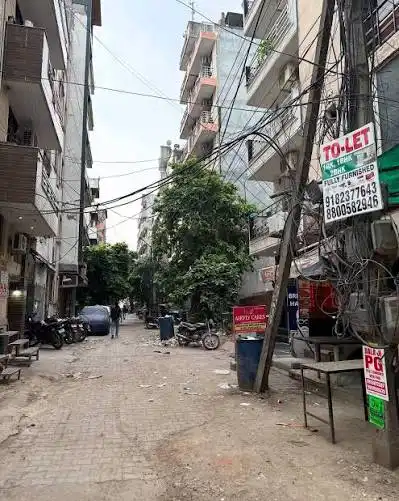
U block in Gurugram is one of the many places preferred by young people for PG accomodations

This is the gap between intention and ground. The government can point to revenue targets met, to enforcement claims, to policies that ban shops in the smallest villages and set distance rules from schools. Those measures exist on paper. On the streets of Gurugram the daily experience is different. Infrastructure lags behind the commercial density. Narrow lanes flood when it rains hard. Power and water are uneven. Building safety is an afterthought until something collapses or burns. The media notices mostly when waterlogging closes roads or a brawl involving a Thar makes the evening news. The ordinary extraction—the landlord who treats tenants as temporary nuisances, the shop that operates past any reasonable closing time because the zone fee was high and the margins must be recovered—rarely sustains attention. Everyone knows. Few treat it as a story worth repeating on ordinary days.

Gurugram has to exist in something like its present form. It absorbs the young professionals who staff the offices that keep Haryana’s growth numbers respectable. It generates the excise, the GST, the stamp duty that fund the rest of the state. Closing the liquor trade or choking the PG market overnight would not produce cleaner streets; it would produce shortages, higher black-market prices, and capital flight. The corporate campuses need housing nearby. The workers need somewhere cheap enough to live while they pay the rents that make the landlords rich. The state needs the licence fees. These are real constraints. Pretending otherwise is rhetoric.

Wine shop in Gurugram at night

The problem is that the constraints have been allowed to harden into a permanent political economy. Revenue is treated as success even when the methods that produce it corrode the place that generates it. Selective enforcement becomes the norm because consistent enforcement would interrupt cash flows that many stakeholders have come to expect. Landlords with multiple properties have little incentive to formalize. Retailers who paid crores for a zone have every incentive to maximize hours and volume. Officials who can smooth problems for a consideration have little reason to invent new ones. Residents who complain are told the city is still developing, or that other places are worse, or that the numbers look good on paper. The cycle continues. Each year the same stories of waterlogging and traffic and illegal constructions surface for a few days and then subside. Business resumes.

A harder look would start from the recognition that Gurugram’s value is not abstract. It is the concentration of people and capital that makes the high licence fees possible. Protecting that value means more than collecting the fees. It means treating the adjacent housing stock as part of the same system rather than a convenient overflow zone. It means enforcing building and safety norms with the same seriousness applied to auction schedules. It means insisting on digital payments and proper receipts so that the informal cash economy does not remain the default. It means closing the gap between the glossy shopfront and the room upstairs that has no ventilation and no paperwork. None of this requires killing the liquor trade or driving the professionals away. It requires treating the place as a city that has to function for the people who actually live and work in it, not merely as a revenue node.

The government’s intentions are not mysterious. It wants the money Gurugram produces and it wants the growth story to continue. Those aims are understandable. The stark reality is that the methods currently used to extract that money leave the city thinner, more unequal, and more fragile than the revenue figures suggest. The wine shops stay lit. The PGs stay crowded. The by-lanes stay narrow. And every few months, when the rain comes or a fight breaks out, the same questions return: what is being done, who is responsible, why does nothing seem to change for long. The answers sit in the stakeholder economics that everyone understands and few are willing to disrupt. Until that changes, Gurugram will keep generating the crores and keep living with the consequences.

#gurgaon#delhi ncr#gurugram

Indian Economy5 min read

NITI Aayog: Diagnosis without the power to cure

NITI Aayog: Diagnosis without the power to cure
niti-aayog-diagnosis-without-the-power-to-cure
Abhijeet SinghAbhijeet Singh

The Planning Commission had one important advantage that NITI does not have: it could connect its recommendations to money.

India’s decision to scrap the Planning Commission in 2015 and replace it with NITI Aayog was not simply a change of name. The government argued that the Planning Commission had been designed for a very different economic system. Its control over plan funds gave it considerable influence over states, allowed it to push centrally designed schemes and put it in an unusual position between the Finance Ministry and the agencies that actually spent the money. By 2014, the economy had changed significantly. Private capital was far more important, states wanted more freedom to set their own priorities, and the Centre's role in directing investment had become less appropriate.

The government's stated idea was therefore fairly straightforward: move away from central allocation towards cooperative federalism, replace five-year planning with longer-term policy thinking, and make the new institution more of an adviser than an allocator of resources. The Cabinet resolution that created NITI, as well as the Prime Minister's remarks at the time, presented it as a think tank that would work with states rather than treating them as recipients of instructions from Delhi.

The problem became clearer once the new arrangement was in place.

The Planning Commission had one important advantage that NITI does not have: it could connect its recommendations to money. That gave it leverage over ministries and states. Once the Planning Commission was abolished, resource allocation moved elsewhere, mainly through the Finance Ministry and the Finance Commission. NITI's role became much narrower. It produces frameworks, indices, discussion papers and monitoring reports, brings Chief Ministers together through its Governing Council, and works through different verticals covering areas such as education, health, agriculture and infrastructure.

That looks like a cleaner division of responsibilities on paper. The difficulty is what happens after NITI identifies a problem. It can make a convincing case for change, but it usually has to leave the decision to the ministry, regulator or state government concerned. Its reports on higher education, for example, have repeatedly pointed to the poor fit between what students study in degrees such as BA, BCom and BSc and what employers are looking for. The diagnosis is not particularly controversial. But a report from NITI does not give it the power to change university curricula, and reforms at the UGC, AICTE or state university level still depend on those institutions deciding to act. NITI can point to the problem. It cannot make the system respond to it.

The way NITI is structured reinforces this. The Prime Minister chairs it, the Vice-Chairperson has Cabinet rank, its full-time members have Minister of State rank and the CEO is a Secretary-rank official. It also has ex-officio ministers and a Governing Council made up of Chief Ministers, which gives it considerable political visibility. But none of that gives NITI statutory powers or the ability to withhold money. It is an extra-constitutional body created through a Cabinet resolution, as the Planning Commission was. The crucial difference is that the Planning Commission had control over plan funds, while NITI does not. Its ability to influence policy therefore depends much more on whether the government wants to act on its recommendations and whether its analysis is good enough to persuade the people who do have the power to act.

This creates a gap between what NITI says it is supposed to do and what people may expect it to do. Its language is ambitious: cooperative and competitive federalism, bottom-up planning, evidence-based policy and Team India. Its actual output is mostly reports, rankings, strategy papers and sector reviews. Some of these have had a real effect. The Aspirational Districts Programme, for instance, gave district-level performance much greater visibility, while NITI's indices have pushed governments to pay attention to areas they might otherwise have ignored.

But producing a good diagnosis and getting institutions to act on it are two different things. If NITI says that undergraduate education needs to change, it is doing the job it was created to do. If the same problems keep appearing in its reports without much change in universities, regulators or ministries, it is reasonable to ask whether the institution has enough influence to do anything beyond identifying them. That is the central tension in NITI: it has the profile of a powerful policy institution, but most of the tools it has are the tools of an advisory one.

The revolving door at NITI is fairly straightforward. A lot of the people doing its analytical work are short-term consultants, Young Professionals and domain experts. Many come from the Big Four, MBB firms or other parts of government. They bring useful skills with them, particularly around data, newer analytical methods and private-sector ways of working. But many stay for only two or three years, put NITI on their CV and move on. The result is that people with experience keep coming in and out, without the institution necessarily building the same depth of permanent analytical expertise.

There is nothing unusual about a government institution hiring consultants. Governments everywhere do it, and NITI is not wrong to bring in people with specialised expertise. The question is what happens when this becomes such an important part of how an institution does its analytical work. NITI can become very good at putting together a report, a framework or a presentation, while finding it harder to retain people who have spent years working on the same problem and understand how to get something through the system when ministries or states push back.

There are also fairly obvious reasons why this arrangement persists. For the Centre, NITI provides a visible policy institution under the Prime Minister without bringing back the Planning Commission's power to allocate funds. For states, getting rid of discretionary plan grants removed one source of friction with the Centre, although Centrally Sponsored Schemes and other transfers still give the Union government considerable influence. Consulting firms get paid for the work, and the people working on NITI projects get a useful name on their CVs.

The cost to the public is harder to see. It is not necessarily that NITI's analysis is wrong. Some of it is quite good. The problem is that the same problems can appear in report after report without being solved, because the institution identifying them does not have the authority or the institutional capacity to keep pushing until something actually changes.

The government’s decision was not necessarily cynical. The Planning Commission had been created in 1950 for a very different economy, when the Centre played a much larger role in directing investment and the states had less room to shape their own priorities. Removing its power to allocate funds was therefore a deliberate move towards a more federal model, with a smaller role for the Centre in coordinating policy.

The problem was what came next. NITI Aayog was presented as an important institution at the centre of policymaking, but it was given very little power to make its recommendations stick. It can study a problem, bring states and ministries together and publish recommendations, but ultimately someone else has to act on them. That creates an awkward gap between how important NITI looks from the outside and what it can actually make happen.

This is not unique to India. Australia’s Productivity Commission and the Netherlands’ CPB are also advisory institutions, but they have built considerable influence through independence, transparent processes and a reputation for producing analysis that governments cannot easily dismiss. NITI Aayog has some of that analytical role, but it also operates much closer to the government. The result is an institution that can sometimes have considerable influence, but cannot reliably turn its analysis into action.

The problem is less about bad faith and more about what the institution is actually set up to do. NITI Aayog can raise questions and make recommendations, but it does not control what happens next. So naturally, its record looks mixed if we judge it by whether those questions ultimately lead to action. That is not entirely a failure of the institution. It is also a consequence of the structure that replaced the Planning Commission.

#planning commission#niti aayog#government

Indian Economy5 min read

E20 in India: National Gains, Household Costs

E20 in India: National Gains, Household Costs
Ethanol blending in petrol has hit the consumers hard in all aspects
Abhijeet SinghAbhijeet Singh

India’s ethanol push was never a bad idea on paper. Cut the oil import bill, give sugar and maize farmers a buyer of last resort, and put a domestic fuel into the tank. Those intentions are real. The country imports most of its crude. Rural incomes matter. The government moved early and hard on E20, hitting the target years ahead of the original 2030 deadline. Forex savings are measurable. Distillery capacity has expanded. On the national ledger, something useful happened.

But the people who actually drive the cars are living a different story.

Most of the petrol fleet on Indian roads was never built for 20 percent ethanol. Industry estimates put the share of pre-2023 vehicles at around 75-80 percent. These cars and bikes were calibrated for E5 or E10 at best. Owners report mileage drops of 10 percent and more. Some see 15-20 percent. Fuel pumps, injectors, and rubber parts that were never designed for higher ethanol concentrations are failing earlier than expected. Independent surveys keep showing the same pattern. The official line is a 3-5 percent efficiency loss and “no major issues.” Real-world experience is louder and more expensive. People are paying more per kilometre and spending more at the workshop. That is not a rounding error. It is a transfer of cost from the national balance sheet onto household budgets.

The economics for oil marketing companies are not pretty either. OMCs buy ethanol at administered prices that have hovered around ₹70-71 a litre all-in, including GST and transport. The cheapest routes are still above ₹60. Refinery-gate petrol has often been cheaper on a pure volume basis. Ethanol also carries less energy, so the true cost gap is wider. In normal crude markets the blend raises the cost of goods sold for the marketing side of these companies. Only when oil spikes to extreme levels does the substitution start looking like a hedge. The rest of the time it is a structural drag on margins. The government is clear that the pricing framework is meant to support producers and farmers, not maximise OMC profits. Fair enough. But the bill still has to be paid by someone, and right now it is being paid partly by the state-owned fuel retailers and partly by consumers who get less distance for their money.

Feedstock reality undercuts the easy narrative of “cheap surplus.” Grain-based ethanol now dominates supply. Maize and rice, including FCI stocks sold at a discount, have overtaken molasses. These are not free resources. They carry water intensity that is hard to ignore, and they compete with food and feed demand. The political support for sugar mills and grain growers is understandable. The long-term arithmetic of land, water, and food security is less comfortable.

The policy has also sent mixed signals. Flex-fuel vehicles are being encouraged while EV incentives keep expanding and some city-level rules lean hard toward electric. Buyers are left guessing which technology will still make sense in five years. Manufacturers face the same uncertainty. A transition that tries to do everything at once ends up clarifying nothing.

None of this means ethanol has no role. It does. A slower ramp that matched the actual vehicle fleet, offered a protection grade for older cars, and kept a tighter eye on feedstock costs would have delivered most of the national benefits with far less anger at the pump. Instead the programme prioritised speed and offtake guarantees. The result is a policy that looks strong in government statements and feels costly in daily life.

Customers are not anti-ethanol. They are anti-paying more to travel less while being told the problem does not exist. That gap between intention and lived experience is the real story.

#indian economy#science#policy#government#crude oil
Research&
Research&
Dashboards
Quick Links